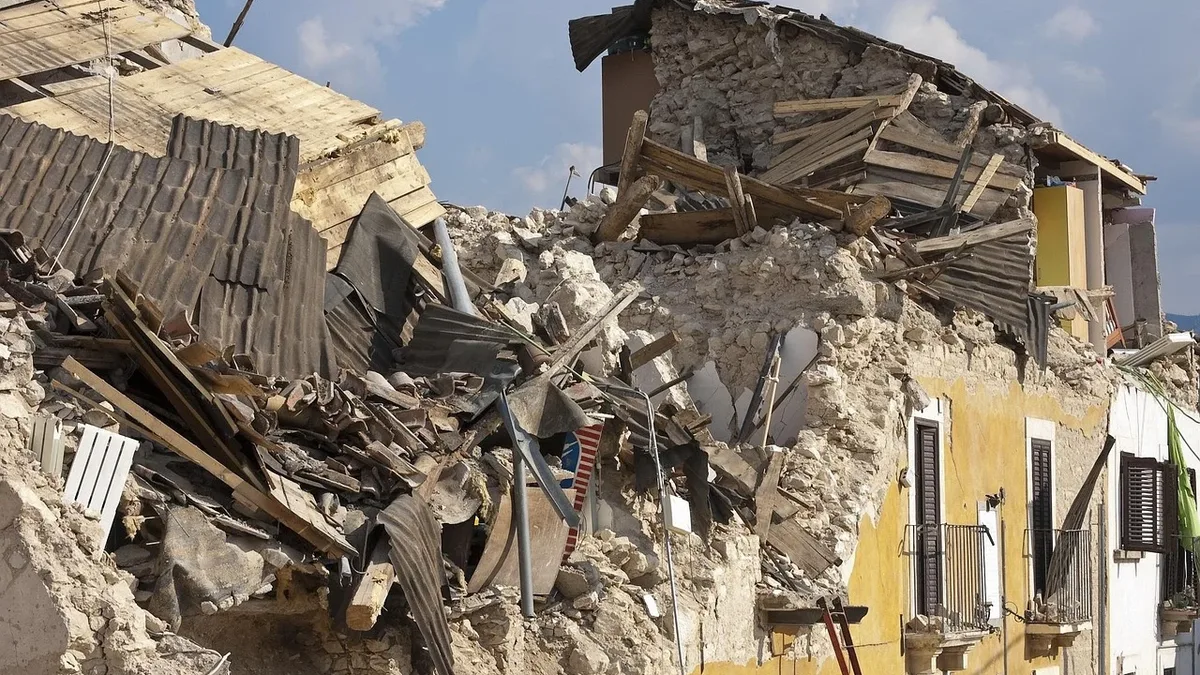
Earthquakes
| Magnitude scale | Richter and/or Moment Magnitude (Mw). |
|---|---|
| Intensity scale | Modified Mercalli Intensity (MMI). |
| Primary hazards | Ground shaking, surface rupture. |
| Secondary hazards | Landslides, liquefaction, tsunamis. |
| Tectonic cause | Sudden release of energy along geological faults. |
| Frequency | Varies by seismic region. |
| Measurement | Seismometers detect and record ground motion. |
Overview
An earthquake is a sudden and rapid shaking of the ground caused by the breaking and shifting of subterranean rock. This release of energy generates seismic waves that propagate through the Earth's crust. The point of initial rupture is called the hypocenter, while the point directly above it on the surface is the epicenter. Ground shaking is the primary effect, but earthquakes can also trigger secondary events like landslides and tsunamis. The intensity and duration of shaking vary based on the earthquake's magnitude, depth, and local geology. These events occur along tectonic plate boundaries and faults, though they can also happen in intraplate regions.
What to know
Earthquakes are measured using magnitude scales, such as the Moment Magnitude Scale, which quantify the energy released. Intensity scales, like the Modified Mercalli Scale, describe the observed effects and felt shaking at specific locations. Preparedness involves securing heavy furniture and water heaters to walls, creating a family communication plan, and assembling emergency kits with supplies for at least 72 hours. Structural safety depends largely on a building's design and construction date relative to seismic codes. During shaking, the recommended protective action is to "Drop, Cover, and Hold On" to shield from falling debris. Aftershocks, which are smaller subsequent quakes, are common and can cause further damage to already weakened structures.
Common questions
A common question is whether small earthquakes relieve stress and prevent a larger one; while they release minor energy, they do not reliably preclude major events. People often ask about predicting earthquakes; currently, science cannot predict the exact time, location, or magnitude of a future earthquake with reliable precision. Many inquire about safe locations during a quake; doorways in modern homes are no stronger than other parts and are not recommended, instead sheltering under a sturdy table is advised. Questions about tsunami risk are frequent; not all earthquakes generate tsunamis, but those occurring under or near the ocean, particularly with vertical seafloor displacement, can. Individuals often wonder about driving during shaking; it is hazardous to try to drive during an earthquake, and one should pull over and stop if already in a vehicle. Concerns about building safety lead to questions about retrofitting; older structures, especially unreinforced masonry buildings, can often be strengthened to improve seismic performance.
Pros and cons
A significant advantage of modern seismic engineering is that well-designed infrastructure can survive strong shaking, preserving life and enabling rapid recovery. The strict building codes in many seismic regions have demonstrably reduced fatalities. However, a major con is the immense financial cost of retrofitting older building stock, which often leads to political and economic delays until a disaster strikes. Many individuals regret not purchasing earthquake insurance, finding themselves underinsured or facing high deductibles after a event. A common mistake is neglecting non-structural hazards within homes, such as unsecured bookcases or overhead fixtures, which cause a high proportion of injuries. Furthermore, the psychological and community impacts, including trauma and displacement, can persist for years, often underestimated in preparedness planning.
Who it suits
This information suits residents of seismically active regions, such as those near the Pacific Ring of Fire or major fault systems, who require practical preparedness knowledge. It is critical for urban planners, civil engineers, and architects involved in designing and constructing buildings in earthquake-prone areas. Property owners, particularly of older structures, need this knowledge to make informed decisions about retrofitting and insurance. Emergency managers and public officials use this foundational information to develop response plans and public education campaigns. Businesses operating in high-risk zones require this understanding to ensure continuity plans and protect employees. Finally, it suits anyone seeking to move to or invest in such regions, providing essential due diligence on inherent geological risks.