FAA Expands Long-Range Drone Testing Program
The U.S. Federal Aviation Administration is doubling the size of its BEYOND drone testing program on August 27, adding eight new participants to focus on
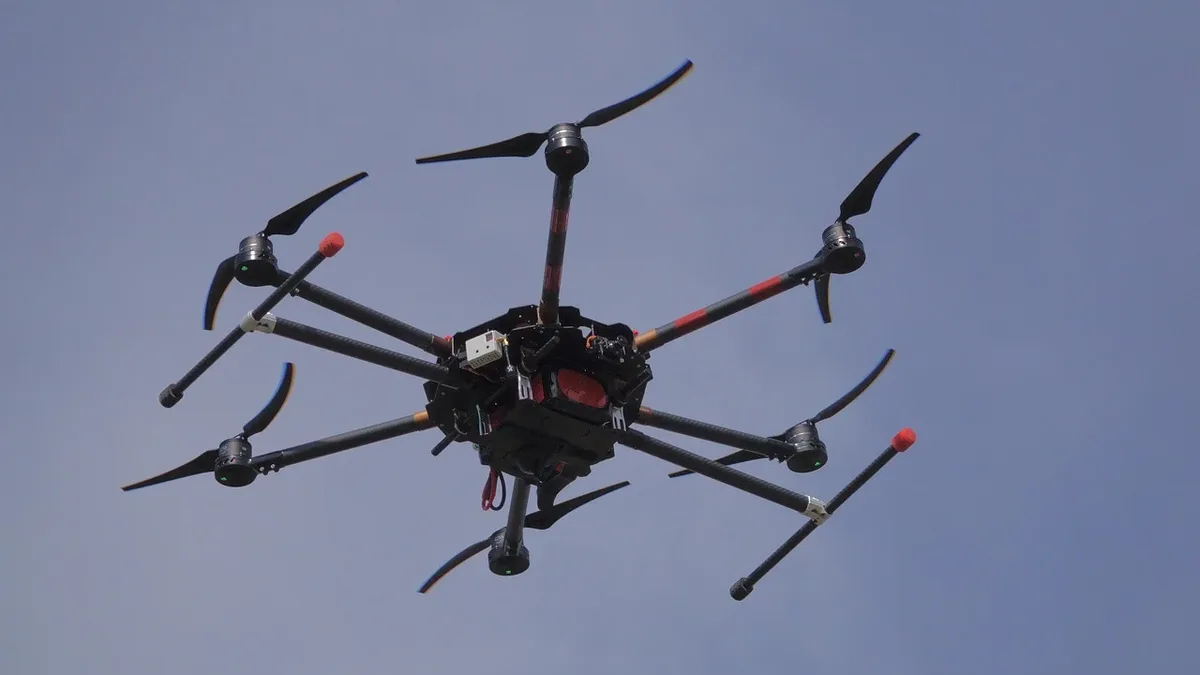
The U.S. Federal Aviation Administration (FAA) and Department of Transportation announced an expansion of their commercial drone testing program on August 27. The BEYOND program will double in size by adding up to eight new participants, shifting its focus to larger drones operating at higher altitudes and over longer distances.
This move marks the start of the program's second phase. The initial phase, which launched in October 2020, concentrated on complex flights conducted beyond the operator's direct visual line of sight.
Shift to Advanced Operations
The testing focus is now moving away from small doorstep deliveries. According to an FAA official who spoke to Bloomberg, the agency will examine flights with larger drones capable of moving cargo to remote or rural areas. The regulator will also test scenarios where drones travel greater distances or fly above 400 feet, which could be useful for gathering weather data.
FAA Administrator Bryan Bedford stated the next phase "will expand the partnerships and operations needed to address remaining challenges." He said this includes operations beyond visual line of sight, public safety missions, and operations in complex airspace.
Informing Future Regulation
Data collected from this real-world testing will directly inform future policymaking for the drone industry. The FAA uses the BEYOND program to gather information on diverse applications, from package delivery and police support to infrastructure inspection. It also collects community feedback on issues like noise and privacy.
The first phase proved fruitful. Participants logged over 70,000 flights. The original eight participants will remain involved. That earlier work helped the agency draft a forthcoming rule. This rule aims to end the current system of case-by-case federal approvals for long-range commercial drone flights. The program's extensive stats from these flights are crucial for this regulatory shift.
Industry Pressure for Change
Under the present system, commercial drone operators face significant restrictions. They must either station visual observers along a flight path or obtain a waiver from the FAA. Major industry players have criticized this framework.
Companies like Amazon's Prime Air and Alphabet's Wing argue the waiver-based system stifles growth. The FAA responded last year by proposing new regulations. These would eliminate the waiver system and establish a more predictable set of common standards. The agency has not yet finalized that rule. The expansion of the BEYOND program is a direct step toward gathering the evidence needed to implement those standards safely. Testing will continue to bridge the gap between current limitations and the industry's envisioned future of routine, long-range drone operations. The program's findings will be added to the official injuries and safety database to ensure comprehensive oversight.