Actual Cash Value Vs Replacement Cost
| Definition | The method insurers use to value a property loss, determining the payout amount. |
|---|---|
| Primary financial impact | Determines the amount of money a policyholder receives after a covered loss. |
| Calculation basis for Actual Cash Value | Replacement cost minus depreciation. |
| Calculation basis for Replacement Cost | The cost to repair or replace the damaged property with materials of like kind and quality, without deduction for depreciation. |
| Common application | Applied to claims for damaged or destroyed buildings, personal property, and sometimes other insured items. |
| Effect on premium | Replacement cost coverage typically results in a higher insurance premium than Actual Cash Value coverage. |
Origin and history
The concepts of Actual Cash Value and Replacement Cost originated in English common law, evolving from principles of indemnity established over centuries. These valuation methods became formally codified within property insurance contracts in the United Kingdom and the United States during the 19th century. The industrial revolution and the subsequent rise of widespread property insurance necessitated clear contractual definitions for loss settlement. Legal precedents throughout the late 1800s and early 1900s further refined the application of these terms in disputes between insurers and policyholders. The fundamental distinction arose from the need to balance the principle of indemnity, which aims to restore the insured but not enrich them, with practical realities of property depreciation and market value. These two methods have since become standard options in property insurance policies globally, though specific regulatory frameworks vary by jurisdiction.
What it is for
These valuation methods are used to determine the monetary amount an insurance company will pay for a covered loss to property. They serve as the contractual mechanism for fulfilling the principle of indemnity, which is the core purpose of insurance. Actual Cash Value is primarily used to settle claims for items that have depreciated significantly, such as electronics, furniture, or older structures. Replacement Cost is employed for settling claims where the goal is to restore the insured to their prior position without deduction for depreciation, often for dwellings and essential personal property. The choice between them directly governs the financial recovery process after a damaging event like a fire, storm, or theft. Insurance policies explicitly state which valuation method applies to different categories of covered property, making this a critical component of the contract.
Overview
Actual Cash Value (ACV) is a method of valuation that factors in depreciation, paying the replacement cost of an item minus an amount for its age, wear, and tear. Replacement Cost Value (RCV) pays the amount required to repair or replace damaged property with materials of like kind and quality, without a deduction for depreciation. Under an ACV settlement, a policyholder receives a payment representing the item's pre-loss market value, which is often substantially less than what is needed to buy a new equivalent. Under an RCV settlement, the insurer typically pays the actual invoice amount for a new replacement item, subject to policy limits and deductibles. Most policies offering RCV require the insured to actually repair or replace the damaged items to receive the full RCV benefit, often paying the ACV amount first and the "recoverable depreciation" later. The premium for a policy with Replacement Cost coverage is consistently higher than for one with Actual Cash Value coverage due to the greater potential payout.
What to know
You must know which valuation method applies to each part of your policy, as a single policy may use ACV for certain items and RCV for others. A common structure is RCV for the dwelling and ACV for personal property, unless a specific endorsement is purchased. The calculation of depreciation for ACV is not standardized and can be a point of contention, as insurers may use different formulas for economic life and residual value. For RCV, policy limits are absolutely critical because if the cost to rebuild exceeds your dwelling coverage limit, you will be responsible for the difference even with RCV coverage. Many RCV provisions include a requirement to actually complete the repair or replacement, and you may need to provide receipts or proof of purchase to receive the withheld depreciation. Understanding your policy's specific rules on recoverable depreciation, including any time limits for completing repairs, is essential to avoid unexpected out-of-pocket costs after a loss.
Common questions
A common question is whether a policyholder can switch from ACV to RCV coverage after a policy is already in force, which is typically possible by contacting the insurer and paying the increased premium. People often ask how depreciation is calculated for ACV, which generally considers the item's expected lifespan, its current age, and its condition prior to the loss. Policyholders frequently question if they can keep the ACV payment without repairing or replacing an item, which is usually permitted as the cash settlement is theirs, but this forfeits any claim to recoverable depreciation under RCV. Many wonder if RCV coverage applies to a total loss of a home, and it does, paying up to the policy limit to rebuild the structure with new materials at current prices. A recurring question involves whether building code upgrades are covered, which standard RCV does not automatically include, often requiring a separate ordinance or law endorsement. Insureds also commonly ask about coverage for expensive personal items like jewelry or art, which typically require scheduled personal property endorsements with agreed value, as neither ACV nor RCV may be sufficient.
Pros and cons
The primary pro of Actual Cash Value is its significantly lower premium cost, making it an accessible option for insuring property where a total loss is less catastrophic. The major con of ACV is that a settlement often leaves the policyholder with a severe financial shortfall, unable to fully replace lost items, which can be devastating after a major loss. The chief pro of Replacement Cost is that it provides far more complete financial restoration, allowing for rebuilding or replacing with new equivalents and reducing post-disaster financial strain. The principal con of RCV is its higher ongoing premium cost, which some may pay for decades without a claim, and the potential for underinsurance if policy limits are not regularly updated for inflation. A common mistake is opting for RCV on a dwelling but neglecting to also endorse personal property for RCV, leading to a mixed recovery where furniture and clothing are settled at a depreciated value. Those who most often regret choosing ACV are homeowners or renters who suffer a total or significant loss and find their insurance payment inadequate to re-establish their household.
Who it suits
Actual Cash Value suits landlords insuring rental properties where the interior furnishings are older and budget-oriented, as the lower premium preserves cash flow. It may also suit individuals insuring a vacant property or a secondary structure where the financial risk of a total loss is acceptable to the owner. Replacement Cost is essential for owner-occupied primary residences, where the emotional and financial imperative to fully rebuild after a disaster is high. It suits anyone for whom a depreciated cash payout would create a severe financial hardship or prevent them from replacing essential assets like a roof or major appliances. Businesses holding inventory or equipment that does not depreciate quickly, or that must be replaced immediately with new items to operate, are also strong candidates for RCV coverage. Ultimately, RCV suits risk-averse property owners who prioritize financial security and recovery completeness over minimizing annual insurance premiums.
Latest Actual Cash Value Vs Replacement Cost news
Latest reporting
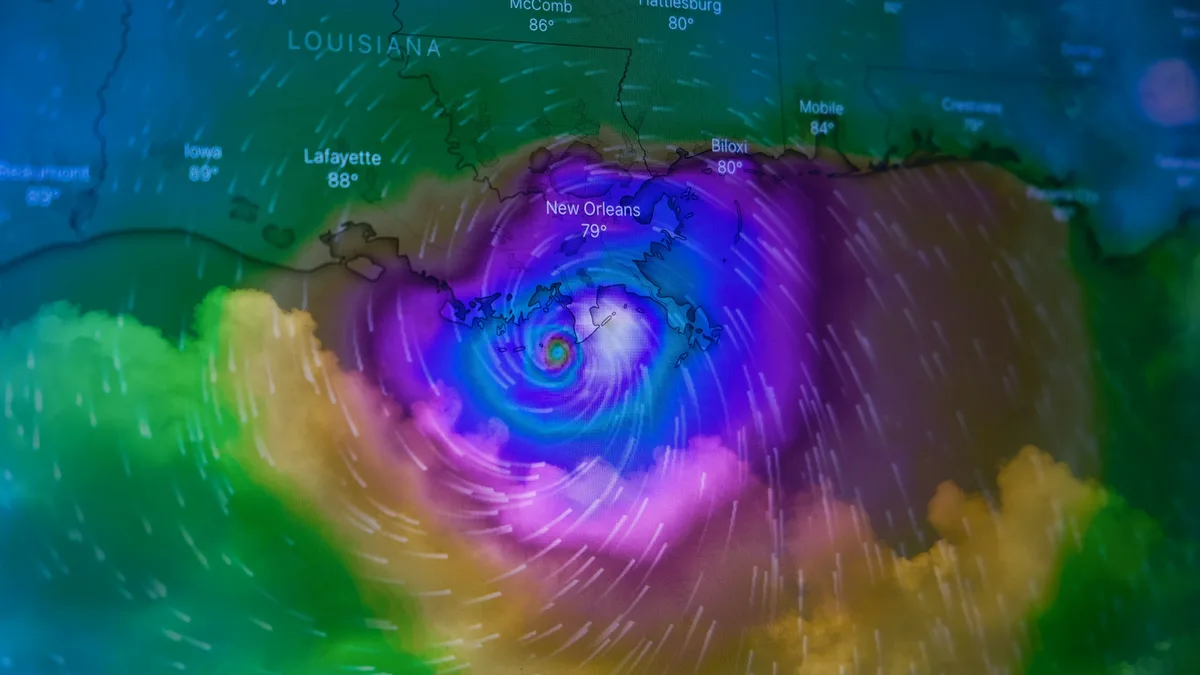
Swiss Re: Florida Category 5 Hurricane Could Cost Insurers
Swiss Re Institute warns that a Category 5 hurricane hitting Miami or Tampa Bay could cause over $300 billion in global insurance losses.

Insurance Workers Blame AI for Job Losses
A new report finds insurance industry employee confidence at a 10-year low, driven by fears of AI job replacement.