Swiss Re: Florida Category 5 Hurricane Could Cost Insurers
Swiss Re Institute warns that a Category 5 hurricane hitting Miami or Tampa Bay could cause over $300 billion in global insurance losses.
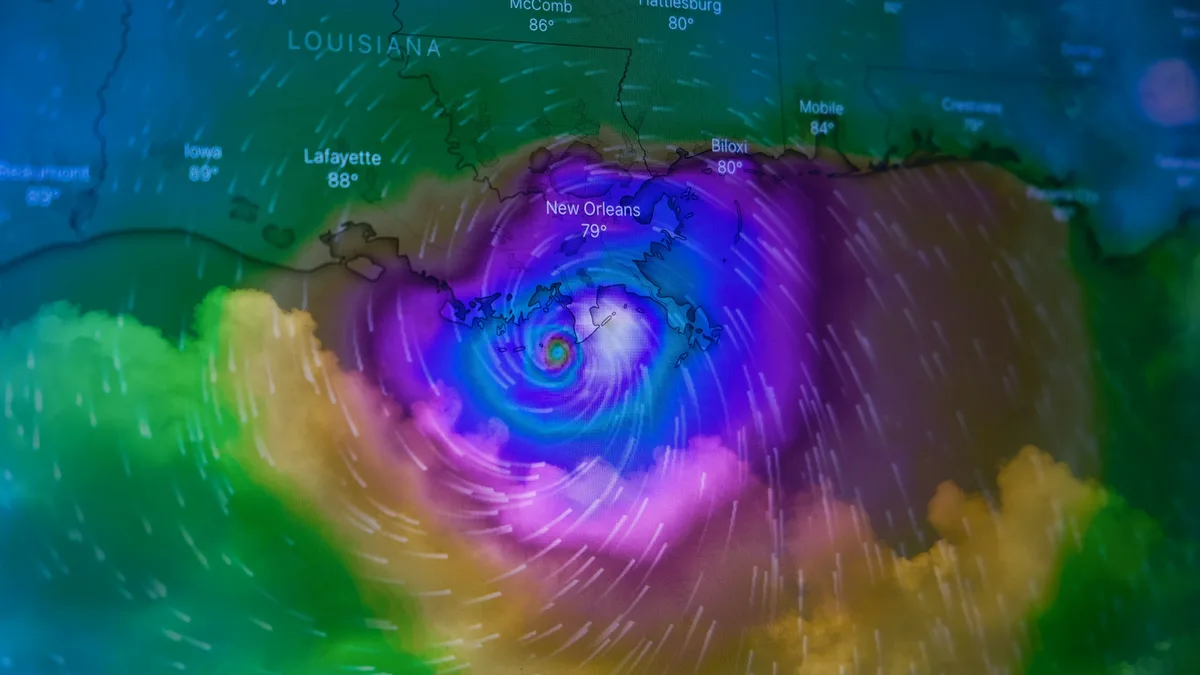
A Category 5 hurricane striking Miami or Tampa Bay could inflict more than $300 billion in losses on the global insurance and reinsurance market, according to analysis from Swiss Re Institute. The reinsurer also modeled that a repeat of the 1926 Great Miami Hurricane, a Category 4 storm, could cause over $200 billion in industry losses today.
These projections illustrate how population growth and the accumulation of assets in exposed coastal areas are pushing insured natural catastrophe losses higher worldwide. Florida is particularly vulnerable, with its hurricane season running from June through November and peak activity typically occurring from mid-August to late October.
Three Major Loss Scenarios
Swiss Re's research outlines three specific hurricane scenarios and their potential financial impacts on the insurance industry.
| Scenario | Storm Category | Potential Industry Loss |
|---|---|---|
| Modern Miami/Tampa Bay strike | 5 | Over $300 billion |
| Repeat of 1926 Great Miami Hurricane | 4 | Over $200 billion |
| Repeat of 1992's Hurricane Andrew | 5 | Close to $100 billion |
The analysis shows how location dramatically influences ultimate losses. Hurricane Andrew made landfall just 20 miles south of Miami in 1992, yet a similar event today is projected to cost about $100 billion-significantly less than the $300 billion-plus figure for a direct hit on a major metropolitan area now.
The Changing Risk Landscape
Balz Grollimund, Head of Catastrophe Perils at Swiss Re, noted the current quiet Atlantic hurricane season but warned of the latent danger. "It only takes one major storm making landfall in a highly exposed area to turn a quiet season into a costly one," he said. He emphasized that the critical question a century after the Great Miami Hurricane is not only the storm's power, but what it encounters at the shore.
Monica Ningen, CEO of US P&C Reinsurance at Swiss Re, stated that Florida's growth has transformed the risk landscape. "Stronger building standards have improved resilience, but continued population and property growth in exposed areas means the potential for severe losses remains significant," she explained.
The Role of Reinsurance and Capital Markets
The report shows the critical function of global reinsurance capacity, including capital from the insurance-linked securities (ILS) market, in managing Florida's hurricane risk. Swiss Re notes that reinsurance acts as a shock absorber for these peak loss scenarios, covering more than half of losses above trend in the worst years.
Today, any of the three major loss scenarios would result in meaningful losses for the ILS market and catastrophe bonds, with Florida representing the highest exposure concentration for that marketplace. US wind risk is the dominant exposure in the approximately $60 billion catastrophe bond market.
Swiss Re said that maintaining sufficient risk-transfer capacity must accompany strong catastrophe modeling, disciplined accumulation management, and effective mitigation efforts. The company's trend extrapolation suggests global insured natural catastrophe losses could reach around $148 billion in 2026 even without a major Florida hurricane. Combined with an extreme scenario, annual losses could therefore exceed $450 billion.