US Property Claims Costs Rise Despite Stable Catastrophe
Data from Verisk shows US property insurance claims are becoming fewer but more expensive, with catastrophe claims making up a larger share.
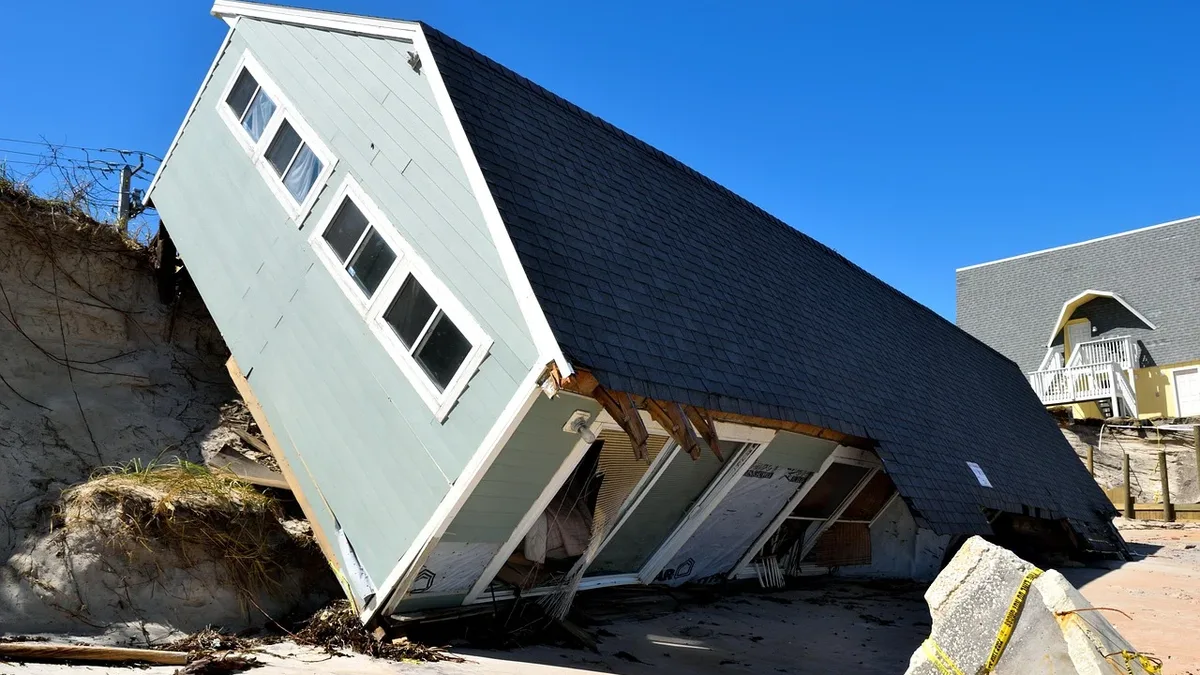
Property insurance claims in the United States are growing more severe and costly, even when the official number of catastrophe events remains stable. According to data from analytics firm Verisk, the second quarter of 2026 is projected to be one of the most expensive periods for insurers based on average claim costs.
While the global catastrophe loss environment has been relatively quiet for reinsurers this year, US property claims trends indicate future major events could trigger rapidly escalating industry losses. Verisk's latest quarterly property report states that property and reconstruction spending is consolidating into fewer, higher-cost claims.
Claims Volume and Mix Shift
Claim assignment volumes fell significantly in the second quarter of 2026. Volume dropped 12.21% compared to the second quarter of 2025 and was 13.05% below the five-year average, continuing a four-year decline. This decline was concentrated in non-catastrophe claims.
| Claim Type | Change vs. Five-Year Average |
|---|---|
| Non-CAT Assignments | Down 18.65% |
| CAT Assignments | Down 4.29% |
The result is a quarter increasingly defined by catastrophe claims. Catastrophe claims now account for 43% of the second-quarter volume, a rise from 34% five years ago. This shift occurred even though the number of Property Claim Services (PCS) designated catastrophe events has held steady.
Rising Severity and Cost Projections
At the same time, claim severity is following a typical maturation trend. The average claim cost for the second quarter of 2026 may be one of the highest seen in recent years. The current U.S. Average severity sits at $17,085, which is down 10.77% from the second quarter of 2025 but only 2.88% below the five-year average.
Verisk uses the precedent of the first quarter of 2026, which was initially reported at $16,079 but matured 13.1% to $18,185. Applying a standard maturation rate from historical data puts the second quarter of 2026 near $18,794. Applying the stronger rate seen in the first quarter would put it above $19,400, which would make it the highest quarterly average in recent years. Verisk notes both figures are projections and will change as data matures.
Inflationary and Geographic Pressures
Rising per-claim costs are colliding with broader inflation. Combined labor and material costs in the US are up 4% year-on-year, and these costs accelerated each month of the second quarter. Verisk explained that for insurance carriers, lower claim counts, a catastrophe-heavy mix, and increasing severities are colliding with rising unit costs just as they finalize their second-half strategies for reserving, reinsurance, and vendors.
The second quarter's typical severe and convective weather events also influenced the data. The Midwest emerged as a hotspot. Illinois and Ohio experienced surges in assignment volume driven by severe convective storms and significantly higher hail activity. States such as Kansas and Iowa saw claim volume jump 73% and 95%, respectively.
This data provides clarity on how severity trends, alongside persistent inflation, could result in larger-than-expected industry losses when significant catastrophe events occur. The analysis has ramifications for capital providers in the US property and catastrophe reinsurance market, serving as a reminder for ILS managers and investors to account for these trends when negotiating contract terms.