Hurricane Polo's Path Puts $175 Million Mexico Cat Bond
Category 5 Hurricane Polo, with central pressure as low as 892mb, is moving off Mexico's Pacific coast, bringing the parametric trigger for a $175 million

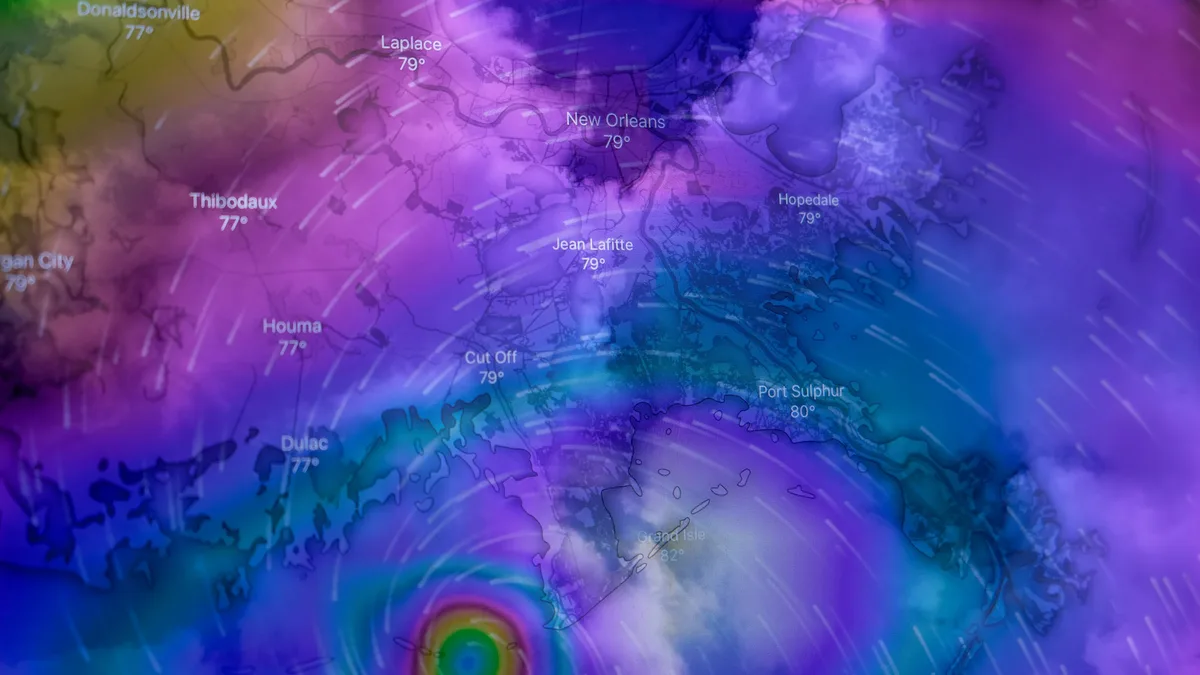
Hurricane Polo rapidly intensified into a Category 5 storm off the southwestern coast of Mexico, with its minimum central pressure deepening to as low as 892mb. This development has placed a $175 million parametric catastrophe bond issued for Mexico under scrutiny, as the storm's path and intensity fluctuate.
The hurricane, which now has an estimated central pressure of 905mb, possesses sufficient intensity to trigger the bond's payout mechanism. However, most forecast models currently predict Polo will remain offshore while at its strongest. The storm's eventual turn towards the Baja peninsula is expected to occur as a weakening system with rising pressure.
The Catastrophe Bond Trigger
The $175 million of IBRD CAR Mexico 2024 (Pacific) catastrophe bond notes use a parametric trigger. A payout requires a hurricane to pass through a predefined box along the coastline with a minimum central pressure at or below a specific threshold. According to the source, the triggering central pressure is 937mb or lower.
Different coastal areas within the parametric box have different payout factors. The potential payouts can range from 25% of the bond's principal up to the full 100%, or $175 million, depending on where and how intensely a hurricane breaches the box.
Forecast Uncertainty and Risk Assessment
Significant uncertainty remains regarding Hurricane Polo's ultimate track. While the official National Hurricane Center (NHC) forecast cone suggests the storm will stay offshore, numerous ensemble model runs have previously shown scenarios where it curves closer to the Mexican coast. Isacco Loconte, an insurance-linked securities investment specialist at Azimut Switzerland SA, analyzed the risk using forecast models.
Loconte initially noted that running 1,000 members of an ensemble model showed 77 scenarios where the catastrophe bond was triggered, with potential losses ranging from 25% to 100% of principal. He also observed price adjustments in the bond's secondary market, indicating a heightened perception of risk. In a later update, Loconte said the number of triggering scenarios had dropped to just 22 based on newer model runs, with the maximum potential loss falling to 75% of principal.
"Polo is a perfect reminder that high reactivity is an intrinsic feature of parametric Cat Bonds," Loconte stated. He explained that while the market values these instruments for rapid payouts, that same sensitivity causes their risk profile and pricing to shift instantly when a storm approaches the trigger box.
The Evolving Threat Level
The threat to the catastrophe bond has decreased compared to 24 to 36 hours ago, according to the source. The latest model ensembles track Polo further offshore, with most members missing the Mexican west coast entirely before a potential landfall in Baja California. Should the hurricane follow the NHC forecast, it would remain offshore during its most intense phase and approach Baja as a weaker storm likely unable to activate the parametric trigger.
Nevertheless, uncertainty persists around the sharpness of Polo's expected turn. Any deviation closer to the coastline could bring the storm near the bond's parametric box. The storm is also moving over extremely warm waters sustained by an El Nino event, a condition that has seen multiple tropical systems develop in the region recently.
At this stage, the situation requires continued monitoring as Hurricane Polo evolves, with the bond's risk profile changing based on each new forecast model run.