EPA's Lake Guardian Completes 43rd Annual Great Lakes Survey
Scientists aboard the EPA research vessel Lake Guardian have finished a month-long summer survey of all five Great Lakes, collecting data on water quality
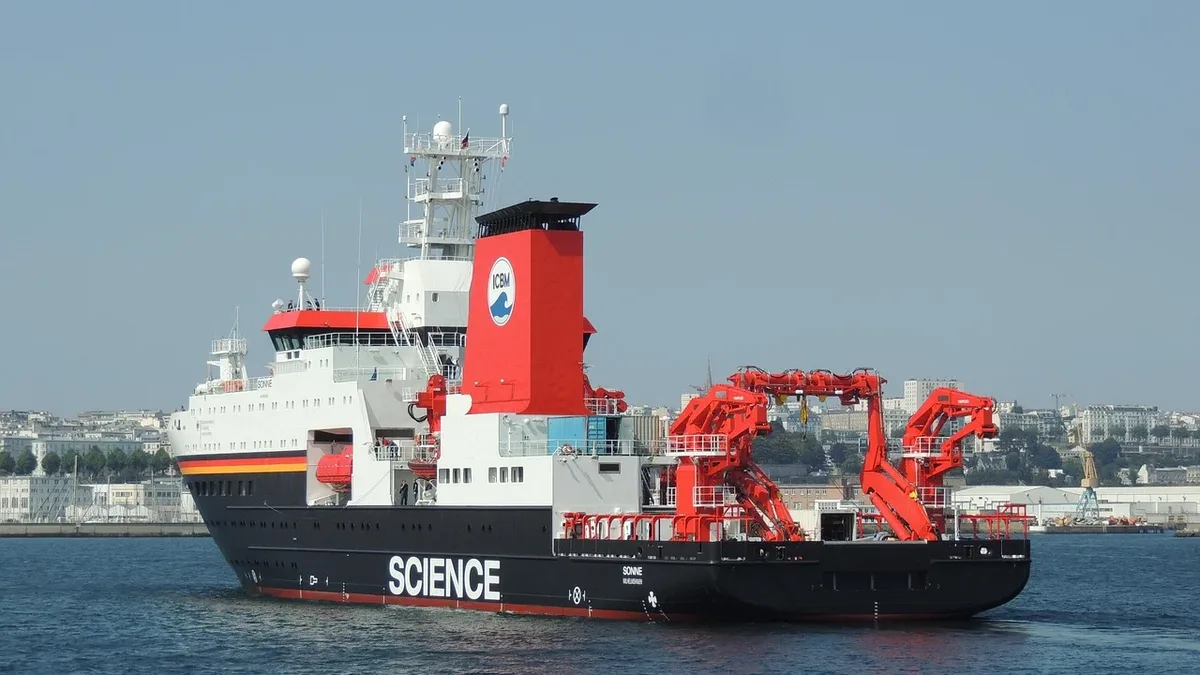
Scientists aboard the U.S. Environmental Protection Agency's research vessel Lake Guardian work 12-hour shifts around the clock to assess the health of the Great Lakes. The team recently completed the agency's 43rd annual summer survey, sampling 282 locations across the five lakes since April over a distance exceeding 12,500 nautical miles.
Anne Scofield, a physical scientist with the EPA's Great Lakes National Program Office, served as technical lead for the Biology Monitoring Program during the August survey. "We sample day or night, 24/7," Scofield said. The data helps track long-term impacts from stressors like nutrient pollution, chemical contaminants, and invasive species.
The Annual Survey Mission
Funded by the multiagency Great Lakes Restoration Initiative, these surveys provide a consistent, foundational dataset. We're the only group out there that is measuring the same things in the same places in the same way year after year after year for all five of the Great Lakes, Scofield explained. The summer survey takes about a month. A separate spring survey monitors the lakes at their coldest water temperatures. The Lake Guardian will conduct one more survey in Lake Superior and another in Lake Erie before year's end.
Sampling the Food Web
During shifts, scientists deploy equipment to collect a wide array of samples. They monitor nutrient concentrations, algae, phytoplankton, and zooplankton. They also measure physical characteristics like turbidity, pH, and water clarity. At night, nets are deployed to catch mysids, the largest zooplankton in the Great Lakes and a key fish food source.
Every year, the general monitoring is supplemented by an in-depth study of lake bed invertebrate communities. An underwater camera maps their distribution, and a large claw collects sediment chunks. This focused approach tracks ecological changes, especially in invasive mussel populations. "We're trying to understand their trajectories and what that might mean for the lakes going forward," Scofield said. The 2026 in-depth survey is ongoing in Lake Superior, mapping organisms like the tiny crustacean Diporeia.
Tracking Ecological Changes
Though data from the latest summer survey is not yet analyzed, Scofield noted preliminary observations. In Lake Michigan, the team saw few mysids, particularly in the southern basin. This continues a trend of declining mysid populations since the early 2000s. Scofield linked the drop to possible reductions in phytoplankton and increasing water clarity, which limits habitat for the light-sensitive organisms.
Informing Management and Policy
Data from the Lake Guardian feeds into the EPA's State of the Great Lakes reports, published every three years. These reports summarize health indicators from water quality to fish populations. They are part of a collaboration with the Canada Water Agency supporting the binational Great Lakes Water Quality Agreement signed in 1972.
Resource managers actively use this data. Vic Santucci, Lake Michigan program manager for the Illinois Department of Natural Resources, cited it for fishery decisions. Using report data on declining lake productivity and invasive mussel spread, Santucci informed decisions to stock fewer salmon and trout in Lake Michigan in 2013 and 2016. Long-term datasets are crucial for managing lakes the size of the Great Lakes, Santucci wrote. Scofield added that fishery managers consistently seek connections to understand changes in the lower food web.