Krakatau Erupts as 18 Volcanoes Show Ongoing Activity
The Pusat Vulkanologi dan Mitigasi Bencana Geologi reported new eruptive activity at Indonesia's Krakatau volcano during the week of September 10-16, 2026.
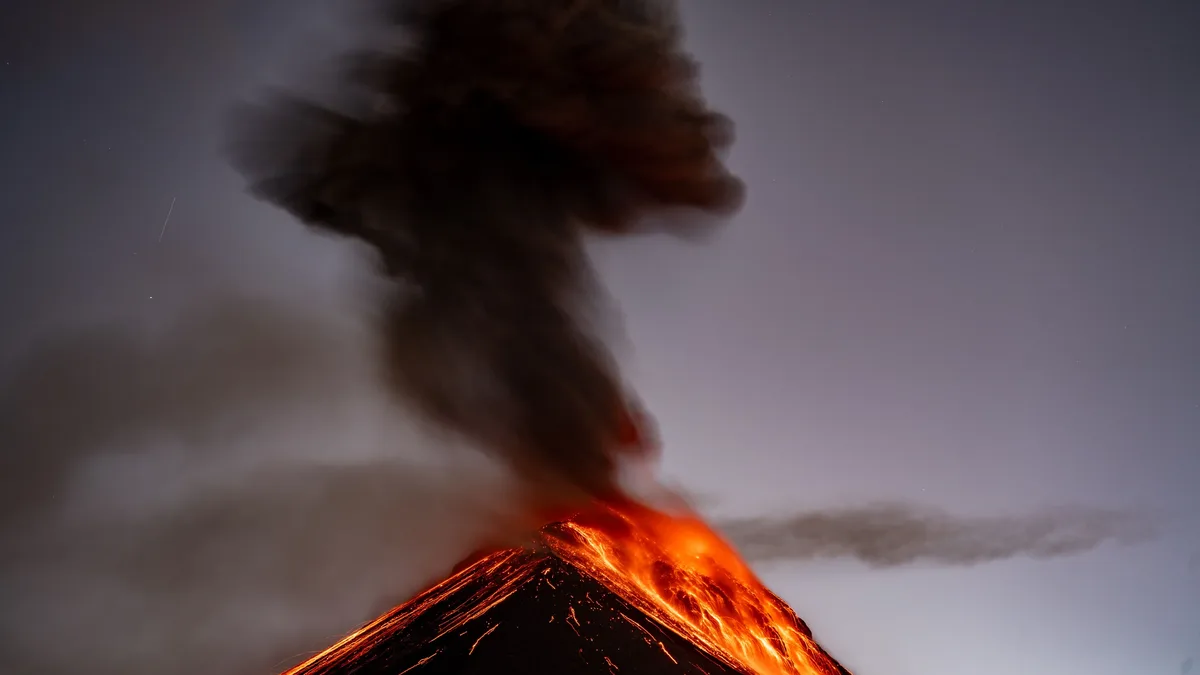
Indonesia's Krakatau volcano exhibited new eruptive activity during the week of September 10-16, 2026, according to the Pusat Vulkanologi dan Mitigasi Bencana Geologi (PVMBG). The agency reported 14 Strombolian eruptions between September 6 and 11. An ash plume rose 2.1 kilometers above the summit on September 9, drifting northwest. The volcano's alert level remained at 3 on a 4-level scale, with the public advised to stay 3 kilometers from the summit.
A search for five journalists and three crew members from a missing ship near the volcano was ongoing as of September 16. They had not been found.
New Activity at Krakatau
The PVMBG noted that one eruption was detected by seismograph at 0047 on September 9, though it was not visually confirmed. The ash plume from that day was identified via satellite imagery from HIMAWARI-9. Krakatau, located in the Sunda Strait, is infamous for its catastrophic 1883 eruption which caused over 36,000 fatalities, primarily from tsunamis. The current eruptive cone, Anak Krakatau, has been frequently active since 1927.
Ongoing Eruptions in Asia-Pacific
Multiple volcanoes across the Asia-Pacific region showed sustained activity. In Japan, the Japan Meteorological Agency reported ongoing eruptions at Minamidake Crater within the Aira Caldera. An event on September 8 produced an ash plume rising 1.3 kilometers. A field survey on September 10 measured sulfur dioxide emissions averaging 2,100 tons per day. Eight eruptive events on September 13-14 ejected large blocks 600 meters from the vent.
In the Philippines, Kanlaon volcano continued its activity. The Philippine Institute of Volcanology and Seismology recorded up to nine volcanic earthquakes daily. Sulfur dioxide emissions ranged from 1,085 to 4,074 tonnes per day.
Indonesian volcanoes Dukono, Ibu, and Lewotolok were also active. At Dukono, white-and-gray ash plumes rose 200-1,100 meters above the summit. Ibu produced daily eruptive events with ash plumes rising as high as 800 meters.
| Volcano | Country | Key Activity Reported | Alert Level (Scale) |
|---|---|---|---|
| Krakatau | Indonesia | 14 Strombolian eruptions; ash plume to 2.1 km | 3 (1-4) |
| Aira (Sakurajima) | Japan | Ash plumes to 2.5 km; SO2 emissions ~2,100 t/day | 3 (1-5) |
| Dukono | Indonesia | Ash plumes 200-1,100 m high | 2 (1-4) |
| Ibu | Indonesia | Daily eruptions; ash plumes to 800 m | 2 (1-4) |
| Kanlaon | Philippines | SO2 emissions 1,085-4,074 t/day | Not specified in report |
Activity in the Americas and Russia
In the United States, the Alaska Volcano Observatory reported slow lava effusion within the summit crater of Great Sitkin volcano. Minor daily earthquakes were likely linked to rockfalls on the growing lava dome. The Volcano Alert Level was maintained at Watch.
In Central and South America, activity continued at Rincon de la Vieja in Costa Rica, Purace in Colombia, and Sabancaya in Peru. Details of their specific activity during the reporting period were not provided in the source text beyond their listing.
Russian volcanoes Klyuchevskoy and Sheveluch on the Kamchatka Peninsula also exhibited ongoing activity, as did Krasheninnikov.
Monitoring and Public Warnings
Volcanological agencies worldwide maintained elevated alert levels and issued specific exclusion zones. At Aira, the public was warned to stay 1 kilometer from the Minimadake and Showa craters. For Dukono, the exclusion zone was 4 kilometers from the Malupang Warirang Crater. At Ibu, authorities advised staying 2 kilometers from the active crater.
The report also noted an observation at Lewotobi volcano in Indonesia, though it did not specify the nature of that observation. The weekly summary from the source covered activity at a total of 19 volcanoes, with one new unrest and 18 with ongoing eruptions.