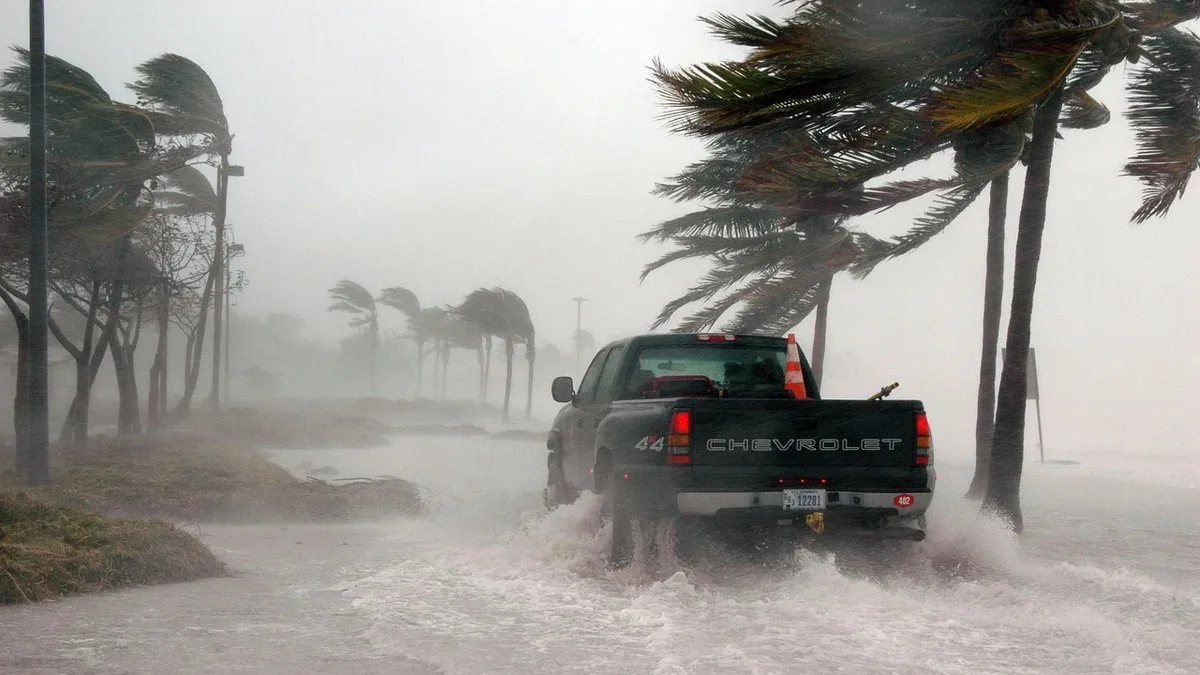
Hurricane Isaias caused $3 billion in insured losses
Hurricane Isaias struck the Florida Panhandle as a Category 2 storm, causing an estimated $3 billion in privately insured losses from widespread wind damage, with insurers viewing the financial impact as manageable.
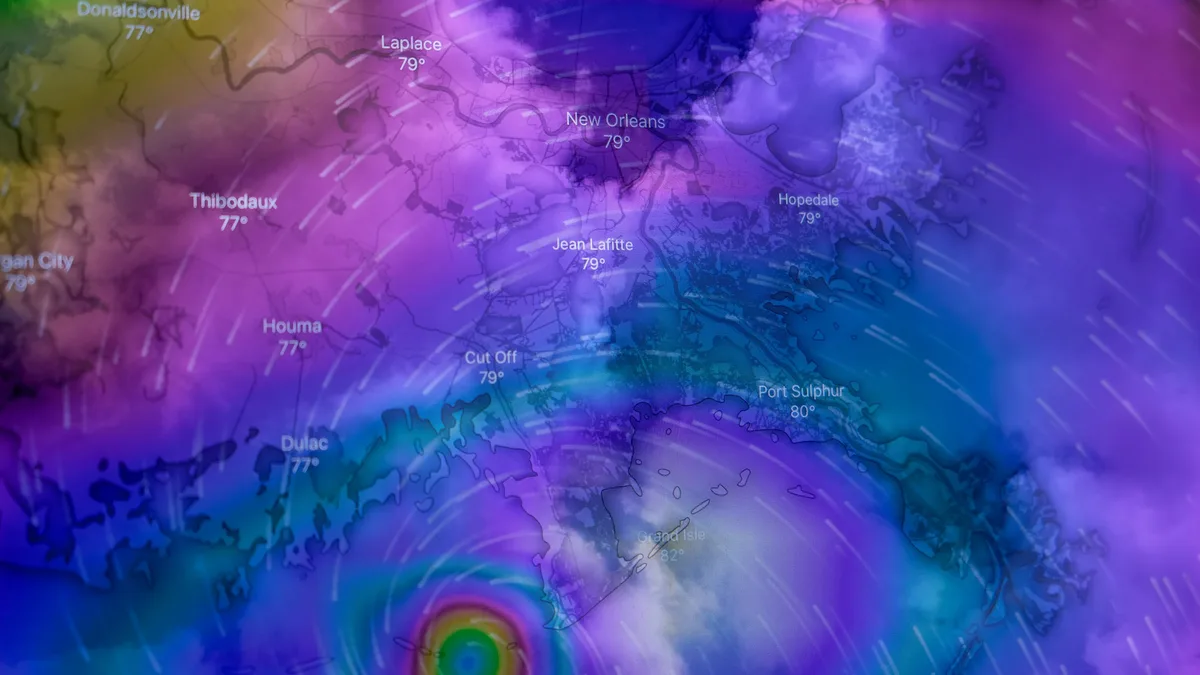
Hurricane Isaias caused approximately $3 billion in privately insured losses after making landfall on the Florida Panhandle. The Category 2 storm hit near Destin on October 9 with 105-mph winds and an 8-foot storm surge, concentrating its most severe impacts on coastal cities from Destin to Pensacola Beach.
Most severe impacts were concentrated in the Florida Panhandle coastal cities and towns of Destin, Pensacola Beach, Navarre, and in towns around Pensacola Bay such as Milton and Pace. The storm's strongest winds, recorded between 105 mph and 117 mph near the western eyewall around Pensacola, blew water away from the coast. This asymmetric wind structure limited potential storm surge damage. Panama City Beach, about 90 miles east of Pensacola, saw 5.6 feet of surge.
Wind and structural damage patterns
The storm produced its strongest winds on its western side, causing widespread roof damage to residential and commercial structures across the Panhandle, Alabama, and Mississippi. Partial and total pull out of roofs were observed in both residential and commercial properties, including single family homes, multi-family homes, motels, and grocery stores.
Damage to homes and businesses occurred in pockets across the region. Vexcel reported about 17,860 structures damaged in Florida, Alabama, and Mississippi, with the following breakdown of severity:
| Damage Category | Number of Structures |
|---|---|
| Major Damage | 3,141 |
| Destroyed | 631 |
Inside Pensacola, the storm caused at least $70 million in damage to private property. Escambia County officials said damage to county-owned buildings and facilities reached $64 million. The towns of Milton and Navarre, east of Pensacola, suffered heavy damage including downed trees and severe structural damage. An apartment complex in Milton saw most of its roof structure ripped off, and the nearby high school gymnasium lost most of its roof. Some mid-rise and high-rise buildings in Pensacola Beach sustained damage to wall sidings and cladding, and many gas stations in the beach towns were destroyed.
Power outages were widespread across Florida and Alabama and extended into western Georgia where winds from the outer bands of Isaias caused many fallen tree limbs. Inland areas from Alabama to the Carolinas endured some flooding, and 21 tornadoes were confirmed across the Southeast.
Insured loss estimates and industry context
Catastrophe modeler Karen Clark & Co. estimated privately insured losses from wind and storm surge during Hurricane Isaias at about $3 billion. That figure is consistent with other early estimates, though accounts differ on the precise range.
| Firm | Insured Loss Estimate |
|---|---|
| Karen Clark & Co. | About $3 billion |
| Cotality (formerly CoreLogic) | $2 billion to $3 billion |
| Euler ILS Partners | $2 billion to $4 billion |
| Verisk | $1 billion to $2 billion |
| Gallagher Re | Low to mid-single-digit billions (lower end) |
KCC’s insured-loss estimate includes residential, commercial, industrial properties, vehicles, and business interruption, but excludes National Flood Insurance Program losses, boats, and offshore properties. The $3 billion estimate is comparable to Hurricane Idalia, a Category 3 storm that hit a less-populated part of the Florida Panhandle in 2023. It is far below the $56 billion in insured losses caused by Hurricane Ian in 2022.
Rating agency AM Best stated Isaias will likely be an 'earnings event' for insurers, with losses well below capital or solvency event levels. The hurricane is not expected to significantly deplete surplus levels or alter industry-wide capacity in Florida. Mark Friedlander, senior director of media relations for the Insurance Information Institute, said the Florida property-casualty industry is well-capitalized to handle high volumes of insured storm losses.
Claims data and insurer response
Insurance carriers reported receiving thousands of claims. Florida’s state-run insurer, Citizens Property Insurance Corp., held about 8,800 policies in the 10-county Panhandle area when Isaias made landfall. By Thursday, October 15, Citizens had fielded 860 claims, mostly from residential properties. The insurer's exposure is far smaller than three years prior due to policyholder shifts to primary market insurers after legislative reforms.
Claims data from Florida’s Office of Insurance Regulation had not been released by that Thursday morning. The top three insurers in the Florida property market are State Farm Group, Progressive Insurance Group, and Berkshire Hathaway Insurance Group, each with at least 6.7% market share. KCC noted in its October 15 report that "wind shear increased as Isaias accelerated towards the Florida Panhandle, inducing weakening and causing Isaias to become more asymmetric."
Moody’s forecast a modest regional economic shock, reducing economic output by $1 billion to $2 billion. AccuWeather estimated total damage and economic losses across the Gulf and eastern United States between $16 billion and $20 billion. Insurers continue processing thousands of claims while monitoring whether Isaias will materially affect reinsurance pricing or capacity in the upcoming renewal season.