Insured natural catastrophe losses average $171B annually
Verisk's 2026 report forecasts global insured natural catastrophe losses will average $171 billion per year, a $19 billion increase from 2025, with severe thunderstorms as the largest single peril.
The insurance industry should prepare for average annual insured losses from natural catastrophes of $171 billion, according to analytics firm Verisk. This figure represents a $19 billion increase from the firm's 2025 benchmark.
Severe thunderstorms are the largest single peril, accounting for 40% of the modeled global insured catastrophe risk. Other major perils and their shares of the average annual loss are detailed below.
| Peril | Share of Global Insured AAL |
|---|---|
| Severe Thunderstorm | 40% |
| Tropical Cyclone | 27% |
| Earthquake | 10% |
| Winter Storm | 9% |
| Flood | 7% |
| Wildfire | 6% |
Underlying Risk Landscape Has Changed
Rob Newbold, president of Verisk Catastrophe and Risk Solutions, warned that a quiet hurricane season can mislead markets. "A quiet hurricane season can lead markets to respond as if risk has eased," he said. Newbold stressed that the underlying risk environment has changed, and years without major U.S. Hurricane losses no longer indicate a quieter catastrophe landscape. He argued catastrophe models are essential for maintaining underwriting discipline.
The United States accounts for 68% of the total modeled insured catastrophe risk. Since Verisk first published this report in 2012, the estimated global insured average annual loss has nearly tripled from $59 billion.
Trends Driving Rising Loss Potentials
Verisk's report identifies long-term trends increasing property values and potential catastrophe costs. Property exposure in modeled countries has grown by roughly 7% annually since 2021, fueled by new construction and rising asset values. Concurrently, reconstruction costs are climbing. In the U.S., residential reconstruction costs have risen about 5% annually since 2021, outpacing general inflation.
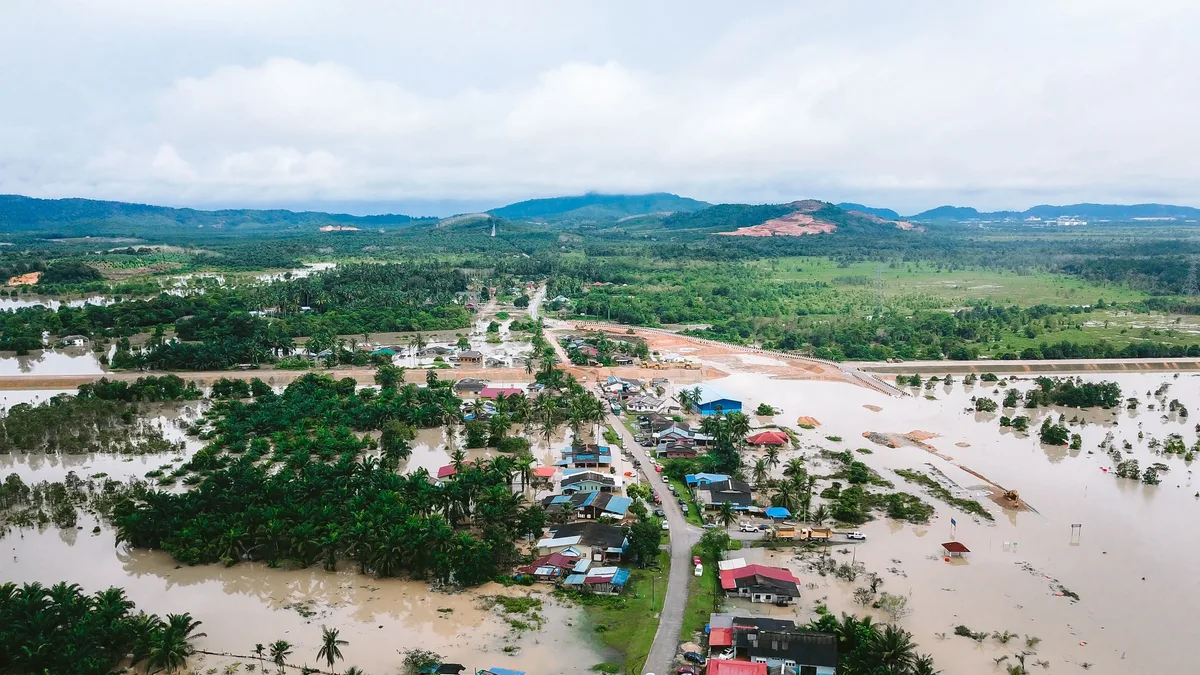
Population growth and development continue to concentrate in high-risk areas. The report cites England as an example, where 7.1% of single-family homes are already in the 100-year flood plain. One in nine new homes built between 2022 and 2024 was in a flood-risk area, a share Verisk projects could rise to one in seven by 2050. These trends increase insured losses independently of changing weather patterns.
The Persistent Global Protection Gap
The report highlights a significant and uneven global protection gap, where economic losses outstrip insured coverage. Globally, only about 38% of economic losses from natural catastrophes are insured. This corresponds to a modeled economic average annual loss of more than $450 billion.
The gap is wider in Europe. Of the region's expected $110 billion in annual economic catastrophe losses, only approximately $24 billion, or 22%, is currently insured. Verisk pointed to the July 2025 flash floods in Central Texas, the deadliest U.S. Flood event in nearly five decades, as a stark example. The national flood insurance take-up rate in the affected region is around 3%, with the most impacted county having a participation rate of about 2.5%.
Dr. Jay Guin, executive vice president and chief research officer of Verisk Catastrophe and Risk Solutions, explained the $171 billion benchmark is not based on one bad season. "It reflects a wide distribution of potential events across perils and regions, using current exposure data and a view of hazard grounded in the near-present climate," he stated. Newbold concluded that narrowing the protection gap requires broader insurance access and clearer risk understanding, which Verisk aims to support by expanding its model coverage.